
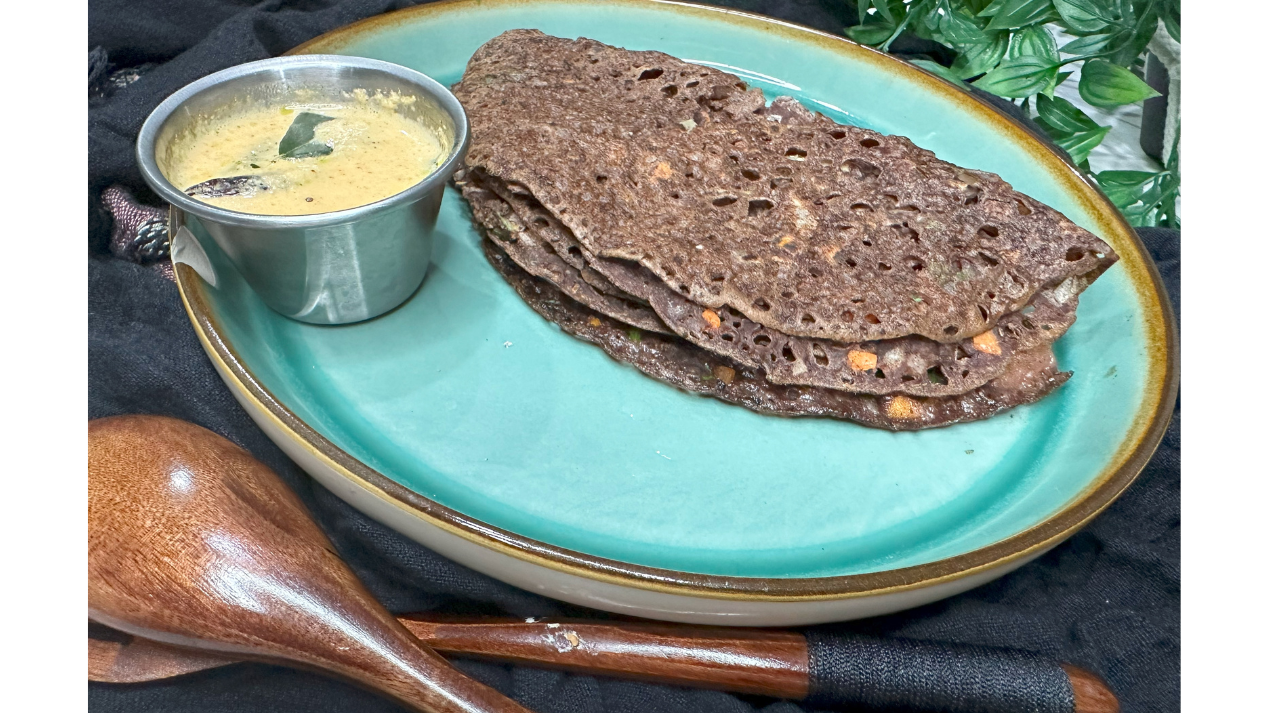
Instant Ragi Dosa/ Pancake
Originating from the heart of South India, Ragi Pancake is a beloved dish known for its simplicity and nourishing qualities. Made from the nutrient-rich millet, ragi, this pancake offers a delightful blend of tradition and wellness. Packed with essential vitamins, minerals, and dietary fiber, it’s a wholesome choice for a balanced diet. Let’s explore the delicious world of Ragi Pancake and discover how it can be a valuable addition to your culinary repertoire.
TABLE OF CONTENTS
- Finger millet/ragi, semolina
- Ingredients of Ragi pancake/Ragi Dosa
- Method of preparation
- Watch video recipe.
- Nutritional value of Ragi pancake
- Additional information
Finger millet/Ragi, Semolina
Ragi/Finger millet: Botanical name Eleusine coracana. Ragi, also known as finger millet, nachni,madua etc ..is a highly nutritious grain native to Africa and widely cultivated in Asia. It is a staple in South Indian cuisine and gaining popularity worldwide due to its exceptional health benefits. Packed with essential amino acids, calcium, and iron, ragi is a powerhouse of nutrients. Its high fiber content aids digestion and helps regulate blood sugar levels. Additionally, it is gluten-free, making it an excellent alternative for those with gluten sensitivities. Ragi’s versatility makes it a valuable addition to various dishes, from porridge to baked goods, offering a wholesome and tasty option for a balanced diet.
Semolina:Semolina, also known as rava or sooji, is a coarsely ground flour derived from durum wheat. It is a versatile ingredient widely used in various cuisines around the world. With its slightly grainy texture and nutty flavor, semolina is a popular choice for making pasta, couscous, and certain types of bread. In addition to its culinary applications, semolina is also a good source of carbohydrates, protein, and several essential nutrients like B vitamins and iron, making it a nutritious addition to meals.
Ingredients of Ragi pancake
- 3 cup ragi flour (finger millet flour)
- 1 medium finely chopped onions
- 1 medium finely chopped tomatoes
- 2 medium finely chopped/grated carrots
- 1/2 cup/handful finely chopped cilantro (coriander leaves)
- 1-2 green chilies, finely chopped (adjust to taste)(optional)
- 1/2 teaspoon cumin seeds
- 1/2 teaspoon salt (adjust to taste)
- 1/2 teaspoon Nigella Seeds (kalonji seeds)(optional)
- Curry leaves(optional)
- Water 5-6 cups
- Oil or ghee for cooking
| Preparation Time:10minutes Cooking Time:20minutes Total time:30minutes |
Method of preparation
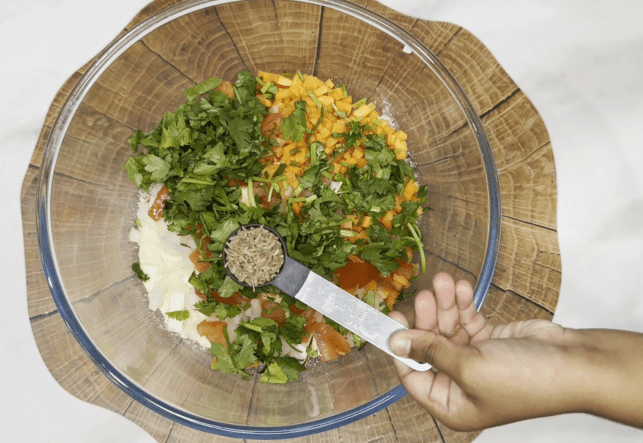
- In a mixing bowl, combine the ragi flour, chopped onions, tomatoes, carrots, cilantro(coriander leaves), green chilies, cumin seeds, kalonji seeds and salt.
2.Gradually add water and mix well to form a smooth, lump-free batter. The batter should be thin watery consistency.
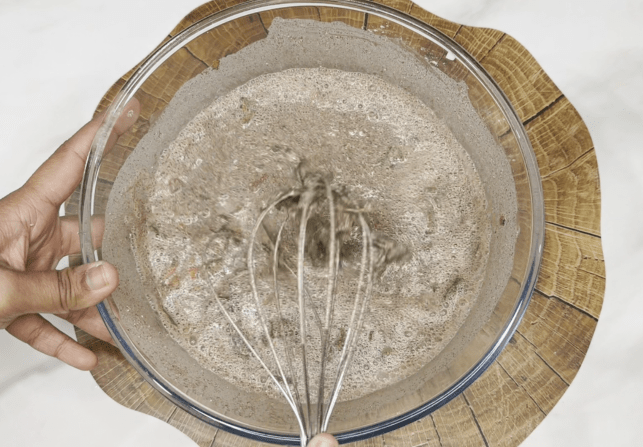
3.Let the batter rest for about 10-15 minutes to allow the flavors to meld.
4.Preheat a non-stick skillet or griddle over medium heat. Grease it lightly with oil or ghee.
5.Pour a ladleful of the ragi batter onto the hot skillet and pour and spread it out gently to form a round pancake.
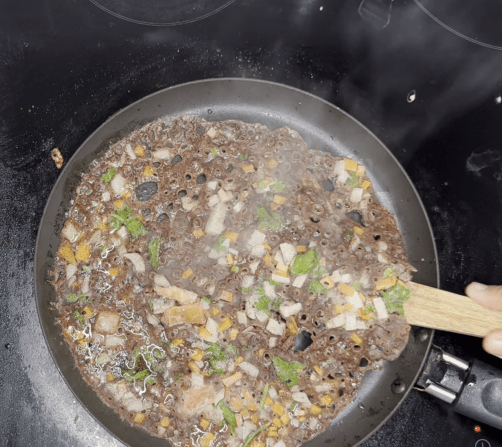
6.Cook for about 2-3 minutes on one side until small bubbles form on the surface.
7.Flip the pancake and cook for another 2-3 minutes on the other side until it’s golden brown.
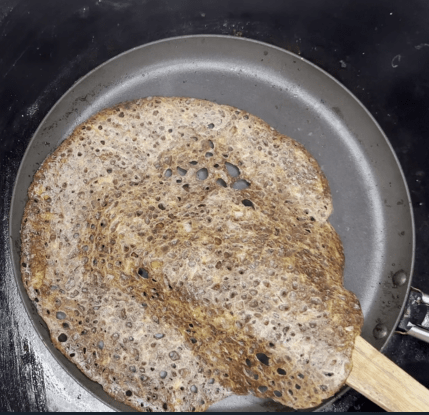
8.Repeat the process with the remaining batter.
9.Serve the ragi pancakes hot with chutney, yogurt, or a side of your choice.
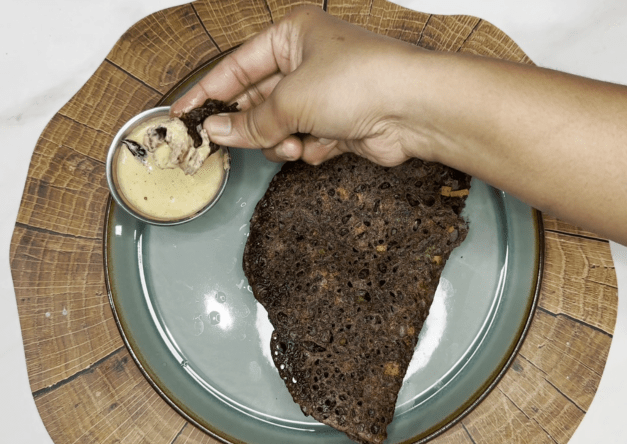
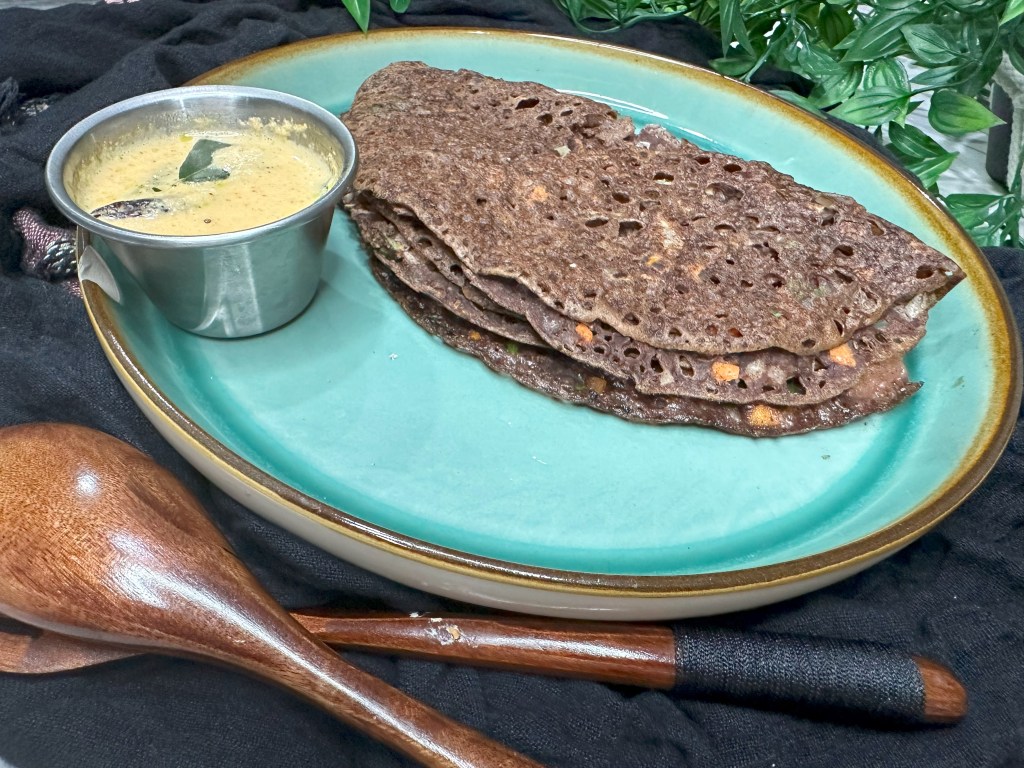
Watch video recipe
Nutritional value of Ragi pancake
For each individual pancake in a batch of 11 to 12, the approximate nutritional values are as follows:
| Calories | 147 kcal |
| Carbohydrates | 29.4g |
| Dietary Fiber | 5.1g |
| Sugars | 2.3g |
| Protein | 4.6g |
| Fat | 1.3g |
| Cholesterol | 0mg |
| Sodium | 198mg |
| Potassium | 314mg |
| Calcium | 79mg |
| Iron | 3.6mg |
Please note that these values are estimates and can vary based on the specific brands and quantities of ingredients used. For precise nutritional information, I recommend using a nutrition calculator or consulting with a registered dietitian. They can provide accurate values based on the exact ingredients and measurements you use in your recipe.
Additional information
1.You can use ragi to make dosas or pancakes without using semolina. This way, you’ll have a gluten-free option. Ragi is a healthy grain that doesn’t contain gluten. It’s a great choice for people who need to avoid gluten in their diet. Making dosas or pancakes with ragi is a tasty and nutritious. It’s easy to do, and you’ll get all the benefits of ragi in a yummy dish!.
2.To make it even healthier, you can grate vegetables like carrots, zucchini, or spinach and mix them into the batter. For a more delicious taste, consider adding grated ginger or a little bit of asafoetida (hing) to the batter.
3.Enjoy the ragi pancakes while they’re hot, served with your favorite chutney, yogurt, or a side dish of your preference.
4.It’s important to maintain a runny consistency in the batter. Otherwise, the pancakes or dosas won’t cook properly and may turn out too hard.
Summing up the Goodness of Ragi Pancakes
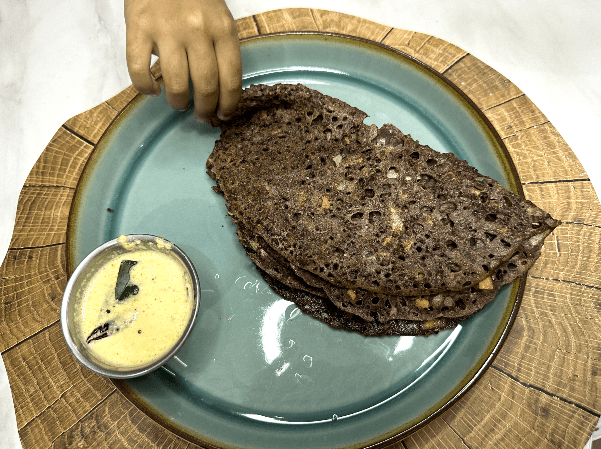
In conclusion, incorporating ragi pancakes into your diet is a delightful way to embrace both flavor and nutrition. These delectable treats, enriched with the natural goodness of finger millet, not only tantalize your taste buds but also offer a host of health benefits. By opting for this gluten-free and nutrient-dense alternative to traditional pancakes, you’re making a conscious choice towards a more wholesome lifestyle. Their ease of preparation and adaptability in flavor make them a versatile addition to your culinary repertoire. Whether enjoyed as a hearty breakfast or a satisfying snack, ragi pancakes are a testament to the fact that wholesome eating need not compromise on taste. So, don your apron, whip up a batch, and relish the satisfying blend of health and flavor in every bite. Your body and taste buds will thank you for it!
Nourish Your Body, Feed Your Soul with Unicorn Fresh Bites.
 Unicorn's Fresh Bites
great post – thanks !!
Download 50 Amazing Keto Recipes –> https://ketodietrecipes.co.uk/
LikeLike
Thanks
LikeLike
Great Read –
Have A Great Day Ahead – Melissa
ps If i May Add , My New Delicious Keto Recipes Blog Is NOW LIVE – http://www.ketodietrecipes.co.uk Please Follow & Leave A Like
LikeLike